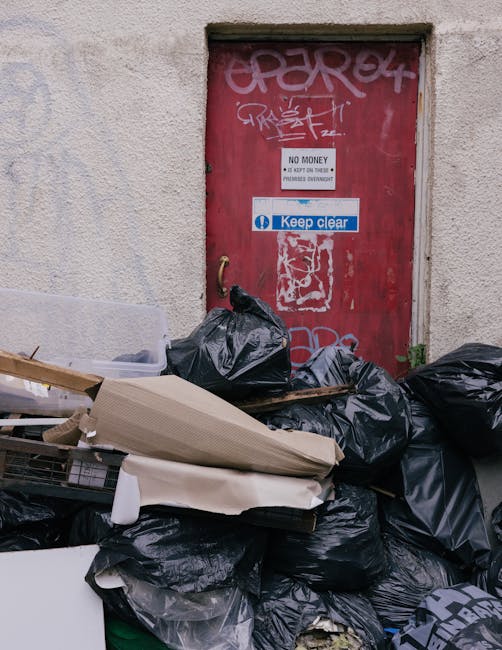
Avoid hidden rubbish removal charges in Hackney
If you have ever booked a clearance and then watched the bill creep up at the end, you already know why avoiding hidden rubbish removal charges in Hackney matters. The quote looked tidy. The van turned up. Then suddenly there were extra charges for stairs, labour, parking, weight, waiting time, or items that were apparently "special". Not ideal, and honestly, a bit maddening.
This guide walks you through the real-world ways to spot sneaky pricing, compare waste removal quotes properly, and ask the right questions before anyone starts lifting sofas, builders' rubble, garden waste, or a half-empty loft's worth of mystery clutter. It is written for Hackney homeowners, tenants, landlords, tradespeople, and businesses who want a fair price without the awkward surprise at the kerb.
To keep things practical, we will cover how rubbish removal pricing usually works, which fees tend to appear late, what a trustworthy quote should include, and how to avoid paying more than you should. Let's face it, nobody wants to argue over a rubbish bag while the van is idling outside.
Table of Contents
- Why hidden rubbish removal charges matter in Hackney
- How rubbish removal pricing usually works
- Key benefits of getting a clear quote
- Who this is for and when it makes sense
- Step-by-step guidance to avoid surprises
- Expert tips for better results
- Common mistakes to avoid
- Tools, resources and recommendations
- Law, compliance, standards and best practice
- Options and comparison table
- Case study or real-world example
- Practical checklist
- Conclusion
- Frequently asked questions
Why hidden rubbish removal charges matter in Hackney
Hidden charges are not just annoying; they can make a job harder to budget, compare, and approve with confidence. In Hackney, where access can be tight, parking can be awkward, and buildings can range from compact flats to older terraces and mixed-use premises, pricing should be explained clearly from the start.
A clear rubbish removal quote helps you understand what you are paying for: labour, transport, loading time, disposal, and any specialist handling. A vague one leaves room for guesswork. And guesswork is where the trouble starts.
There is also a trust issue. If a provider is not upfront about call-out fees, minimum charges, congestion-related costs, or restrictions on certain waste types, you may feel pressured to accept the extra cost because the rubbish is already outside. That is the classic awkward moment nobody wants on a damp Thursday morning.
In a busy local area like Hackney, fair pricing matters because people often need fast, practical clearance help: after a tenancy ends, before a flat sale, during a renovation, or when a business has to clear stock and old equipment. The quote needs to be honest enough to let you decide properly, not just persuasive enough to get the booking.
Key takeaway: The cheapest-looking quote is not always the cheapest job. The safest approach is to compare what is included, what is excluded, and what might be added later.
How rubbish removal pricing usually works
Most rubbish removal jobs are priced using a combination of volume, weight, item type, labour, and access. That sounds simple on paper. In practice, the final number can shift if any of those factors are unclear at the start.
Here is how the main parts usually work:
- Volume: How much space your waste takes in the truck or van.
- Weight: Heavy materials such as rubble, soil, tiles, or bulky timber can cost more to dispose of.
- Labour: Carrying items from a top-floor flat, basement, or hard-to-access room may require extra time.
- Access: Stairs, narrow hallways, no lift, or limited parking can affect the job.
- Waste type: General household junk is different from builders' waste, electricals, or furniture disposal.
A good provider should explain whether the quote is based on estimated load size, a site visit, photos, or a fixed service package. If they only give you a low headline number and little else, that is a yellow flag. Not always a bad sign, but worth a closer look.
For example, clearing a garage of mixed items is very different from removing a few old wardrobes from a flat. The first job may include odd shapes, dust, and heavier bits; the second may be straightforward. A provider offering garage clearance or furniture clearance should be able to explain those differences plainly.
One useful habit: ask for the price in writing and ask what would change it. That simple question does a lot of heavy lifting.
Key benefits and practical advantages
When the pricing is transparent, everything gets easier. You can compare quotes properly, plan the timing of the removal, and avoid those slightly exhausting back-and-forth conversations where everyone is trying to remember what was said on the phone.
- Better budget control: You know the likely final cost before the team arrives.
- Less stress: No one likes a surprise invoice at the end of a clearance job.
- Faster decisions: Clear pricing makes it easier to choose between providers.
- Fewer disputes: Written inclusions reduce misunderstandings later.
- More suitable service choice: You can match the job to the right service, such as house clearance, office clearance, or builders waste clearance.
There is another benefit that is easy to overlook: honesty helps you plan the rest of your day. If you know whether the crew will need access to the front entrance, how long the job should take, and whether payment is due before or after collection, the whole thing feels calmer. Small thing, maybe. But very welcome when you are juggling work, family, or a handover deadline.
Who this is for and when it makes sense
This matters to more people than you might think. Hidden charges can catch out almost anyone who needs waste cleared quickly and does not want to spend an afternoon decoding vague pricing language.
You may need this if you are:
- moving out of a flat and need a quick flat clearance
- clearing a loft, garage, or spare room before a sale or renovation
- disposing of old sofas, tables, wardrobes, or white goods
- removing garden waste after a big tidy-up
- dealing with builders' debris after a refurb
- emptying an office or business unit with mixed rubbish and equipment
- trying to arrange a one-off clearance without long delays
It also makes sense for landlords, letting agents, and small business owners who need to keep costs tight and avoid awkward tenant disputes. If a job involves multiple categories of waste, different access conditions, or large item disposal, a clear quote becomes even more valuable.
Truth be told, the more complicated the clearance, the more important it is to pin down the details early. Simple jobs can be straightforward. Messier ones usually are not.
Step-by-step guidance to avoid surprises
Here is a practical process you can use before booking any rubbish removal service in Hackney.
1. List everything that needs removing
Walk through the space and write down the items. Be specific. "Junk from the loft" is too vague. "One broken wardrobe, three boxes of books, one mattress, mixed cardboard, and some old paint tins" is much better.
2. Separate normal waste from special items
Some items can change the price because they need different handling. Furniture, garden waste, rubble, bulky appliances, and mixed office waste may all fall into different pricing buckets. If you are using a service for garden clearance or business waste removal, spell out the materials clearly.
3. Ask how the quote is calculated
Is it based on van load size, weight, labour time, or a fixed job price? Ask which parts are included. Ask what could trigger a surcharge. If they cannot explain it clearly, that is useful information in itself.
4. Check access details
Be honest about stairs, narrow doorways, parking distance, lift access, or restricted entry. This is where many hidden charges appear later. A top-floor flat with no lift is not the same as a ground-floor pickup, obviously.
5. Confirm the disposal method
Ask where the waste will go, at a basic level, and whether recycling is included where appropriate. A responsible operator should be able to explain their approach to recycling and sustainability without turning it into a sales script.
6. Get the quote in writing
Text message, email, or an itemised booking summary is much better than memory. Written confirmation helps you compare and gives you something to refer back to if the job changes.
7. Clarify payment terms
Check whether payment is due before collection, on completion, or by card. If you want to understand transaction handling and security expectations, review the company's payment and security information.
8. Reconfirm before the team arrives
If anything changed, say so. Better to update the quote than argue about it afterwards. Nobody wins that one.
Expert tips for better results
From a practical point of view, the best defence against hidden fees is clarity plus a bit of preparation. You do not need to become a waste industry expert. Just ask sharper questions than the average caller.
- Take photos before booking: Good photos help the provider judge volume and access more accurately.
- Measure awkward items: Large wardrobes, mattresses, desks, and appliances can affect load planning.
- Bundle similar waste together: Mixed waste can be harder to price than a single waste stream.
- Ask about minimum charges: Some jobs are priced at a minimum level regardless of volume.
- Check whether labour is included: Some quotes only cover collection from the kerb, not internal loading.
- Be careful with "from" prices: They are not always misleading, but they should come with a clear explanation.
One small but useful tip: if the provider sounds rushed when you describe the job, slow the conversation down. Rushed quoting often becomes rushed pricing later. The calm, boring version is usually the safer one. Boring can be brilliant, frankly.
If you are looking at a full property clearance, it can also help to choose a service that matches the exact job rather than forcing a general waste quote onto a more specific task. A clearer fit often means fewer surprise add-ons.
Common mistakes to avoid
A lot of people get caught out by the same handful of mistakes. None of them are dramatic. They are just easy to make when you are in a hurry.
- Accepting a verbal price only. Always ask for written confirmation.
- Forgetting to mention access issues. Stairs, distance from parking, and lift access matter.
- Not describing the waste properly. "General rubbish" can mean almost anything.
- Assuming all rubbish is priced the same. It usually is not.
- Ignoring disposal terms. Ask what happens if items are heavier, larger, or harder to remove than expected.
- Choosing on price alone. Cheap can become expensive if add-ons appear later.
Another common one: people clear half the room before the team arrives, then assume the quote should stay identical even though the job has changed. Sometimes that helps, sometimes it does not. Best to let the provider know.
And yes, a few providers will still keep it vague on purpose. That is exactly why questions are your friend.
Tools, resources and recommendations
You do not need fancy software to avoid hidden rubbish removal charges. A few basic tools are enough.
- Phone camera: Take clear photos of the items, the access route, and any narrow spaces.
- Notebook or notes app: Keep a simple waste inventory.
- Measuring tape: Handy for wardrobes, sofas, sheds, or bulky items.
- Parking awareness: Note where a van can realistically stop nearby.
- Questions checklist: Keep your pricing questions ready before you call.
If you are comparing providers, useful website pages to review include pricing and quotes, terms and conditions, and insurance and safety. Those pages can help you understand how a company sets expectations and what safeguards they put in place.
For larger or more complex jobs, it is also sensible to check whether the provider offers the specific service you need rather than a generic clearance only. For example, loft clearance, furniture disposal, and waste removal may each suit different situations.
Law, compliance, standards and best practice
For waste collection in the UK, it is sensible to deal only with operators who can describe their process responsibly and who do not leave you guessing about disposal. You do not need a lecture, just basic assurance that waste is being handled legally and safely.
As a customer, the most practical compliance questions are usually these:
- Is the business insured for the work it carries out?
- Does it explain how items are transported and processed?
- Are any restricted items handled separately?
- Are the terms clear before booking?
- Does the company have a sensible complaints route if something goes wrong?
Best practice also means keeping the service honest about what is included. A fair quote should make the scope obvious, especially for jobs involving access challenges, mixed waste, or bulky items. If you want to see how a provider frames its responsibilities, pages like health and safety policy, complaints procedure, and about us can be useful trust signals.
If a company is transparent about terms, security, insurance, and recycling, that usually tells you a lot about how the job will be handled. Not everything, of course, but enough to make a better call.
Options and comparison table
Different waste removal approaches suit different situations. The right choice depends on the size of the job, how quickly it needs doing, and how much lifting is involved.
| Option | Best for | Potential downside | How to avoid hidden charges |
|---|---|---|---|
| Fixed-price clearance | Jobs with a clearly defined load | May exclude extra labour or access issues | Confirm inclusions and exclusions in writing |
| Estimated quote from photos | Standard household or office jobs | Can change if photos are incomplete | Send clear pictures from multiple angles |
| Site visit before pricing | Large, mixed, or awkward clearances | Takes more time to arrange | Use it for complex jobs where surprises are likely |
| Load-based pricing | Flexible jobs with mixed waste | Can be hard to judge without experience | Ask how volume is measured and what counts as a full load |
| Task-specific service | Furniture, garden, loft, garage, or office jobs | Less useful if the job is highly mixed | Choose the service that matches the main waste type |
A quick rule of thumb: if the job is simple, a photo quote may be enough. If the job is messy or varied, a site visit or more detailed estimate can save you money later. There is no prize for making a complicated job sound simple.
Case study or real-world example
Imagine a renter in Hackney clearing out a two-bedroom flat at the end of a tenancy. The flat has a broken sofa, a mattress, a desk, several bagged items, and a few pieces left in the hallway. The first quote they receive is a very attractive low price. Great, until the provider later adds extra charges for:
- two flights of stairs
- parking distance from the entrance
- heavy mattress handling
- mixed waste
- waiting time while the tenant finished packing
That quote was not necessarily fake. It was just incomplete.
Now compare that with a cleaner process. The renter sends photos, explains that the flat is on the second floor with no lift, lists the items clearly, and asks for a written breakdown. The final quote is a bit higher at the start, but it is stable. No surprise add-ons. No stress when the van arrives. No last-minute haggling in the stairwell.
That is the real lesson here: the cheaper quote is not always the safer one. The better quote is the one that survives contact with the actual job.
Practical checklist
Use this checklist before confirming any rubbish removal booking in Hackney.
- Have I listed every item that needs removing?
- Have I described the access clearly, including stairs and parking?
- Have I separated furniture, garden waste, builders' waste, and mixed rubbish?
- Have I asked what is included in the quote?
- Have I asked about extra charges and when they apply?
- Have I requested the quote in writing?
- Have I checked payment terms and timing?
- Have I reviewed the company's insurance and safety information?
- Have I confirmed whether recycling is part of the process?
- Have I chosen the service that fits the job, such as house, loft, garage, or office clearance?
If you can tick most of those off, you are in a much stronger position. Simple, really. Not always easy, but simple.
Conclusion
Hidden rubbish removal charges are usually avoidable when you slow the process down just enough to ask the right questions. In Hackney, where access and property layouts can vary a lot, clarity matters even more. A solid quote should explain what is included, what could change, and how the work will be carried out.
Whether you are clearing a flat, a garage, an office, or a mix of household and garden waste, the safest approach is the same: describe the job properly, get the price in writing, and check the terms before anyone starts loading. That one habit can save a lot of hassle.
And if you are comparing providers, pay attention to the pages that show how they handle pricing and quotes, recycling and sustainability, and contact options so you know who you are dealing with.
Get a free quote today and see how much you can save.
When the pricing is clear, the whole job feels lighter. That is worth something.
Frequently Asked Questions
What counts as a hidden rubbish removal charge?
A hidden charge is any extra cost that was not made clear before booking. Common examples include added labour, difficult access, parking-related fees, overweight waste, or surcharges for certain items.
How do I know if a quote is fair?
A fair quote should explain what the price includes, what it excludes, and what might change the cost. If the provider can describe the job plainly and in writing, that is a good sign.
Should I send photos before getting a price?
Yes, if possible. Photos help a provider assess volume, access, and waste type more accurately. It can reduce the risk of an underestimated quote.
Why do stairs or no lift access affect pricing?
Because they increase the time and effort needed to remove the waste safely. A second-floor flat with no lift is more labour-heavy than a ground-floor pickup.
Are all rubbish removal companies transparent about fees?
No, and that is why comparing terms matters. Some providers are very clear; others rely on a low headline price that changes later. Ask direct questions.
Is a fixed-price quote better than a load-based quote?
Neither is always better. A fixed price is useful for clearly defined jobs, while load-based pricing can work well for mixed or variable waste. The best option depends on the job.
Can I avoid extra charges by separating the waste myself?
Often, yes. Separating items by type can make the job easier to quote and may reduce the chance of a mixed-waste surcharge. It is not always necessary, but it helps.
What should I ask before booking rubbish removal in Hackney?
Ask what is included, how the price is calculated, whether access issues matter, what counts as extra, and how payment works. Those five questions cover a lot.
Do I need to worry about recycling and disposal?
Yes, especially if you want responsible handling of your waste. A trustworthy provider should be able to explain its approach to recycling and disposal without being vague.
What if the team arrives and says the job costs more?
Ask them to explain exactly why. If the original information you gave was accurate, you may be able to challenge the extra charge. That is why written quotes and clear descriptions matter so much.
Is it worth using a specialist service for furniture, loft, or garden waste?
Usually, yes, if most of your waste fits that category. A more specific service can give you a clearer quote and fewer surprises than a broad, one-size-fits-all approach.
Where can I find more information about a provider's policies?
Useful pages to check include terms and conditions, insurance and safety, complaints procedure, and payment and security. They help you understand how the company works before you commit.