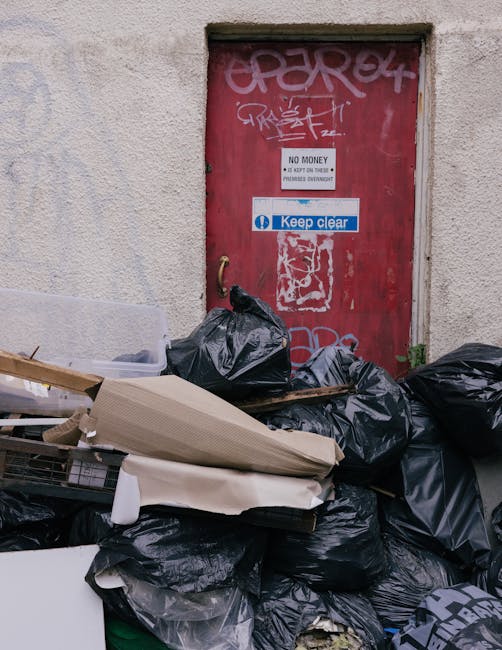
What to know about delayed rubbish collections in Hackney

When your bin day slips, the knock-on effect is immediate. Bags start to pile up, the hallway smells a bit worse than it did an hour ago, and you begin wondering whether the collection has been missed, delayed, or quietly rescheduled without anyone telling you. If you are trying to make sense of delayed rubbish collections in Hackney, you are not alone. It is one of those everyday issues that feels small until it is suddenly very, very inconvenient.
This guide explains what delayed collections usually mean, why they happen, how to respond without wasting time, and what your practical alternatives are if waste is building up. We will also look at sensible local best practice, how to avoid common mistakes, and when a private clearance or waste removal service can take the pressure off. A calm plan beats a messy landing, every time.
Why delayed rubbish collections in Hackney matter
Delayed collections are more than a nuisance. In a busy borough like Hackney, where flats, terraced homes, shared entrances, and commercial premises all generate waste on tight schedules, even a short delay can create a chain reaction. Bags get left outside longer than planned. Recycling gets mixed with general waste. Carts or bins overflow. And once that starts, the whole street can feel a bit off.
There is also a practical side to it. Delays can affect hygiene, pest control, access in communal areas, and how safely people can move through hallways or front gardens. For businesses, delayed commercial waste collection can quickly become a customer-facing issue. No cafe or office wants waste sitting around for days. Let's face it, nobody enjoys stepping over a bin bag on the way in.
The other reason this matters is simple planning. If you know how to respond to delayed collections, you can prevent the situation from becoming a much bigger problem. That may mean holding waste correctly for a little longer, separating materials properly, or arranging a one-off clearance. For larger household jobs, a planned service such as waste removal or a targeted home clearance can keep things moving when the regular route is disrupted.
Expert summary: A delayed rubbish collection is usually a timing problem, but the real risk is what happens next: overflow, odour, missed recycling, and avoidable stress. The best response is quick, tidy, and documented.
How delayed rubbish collections in Hackney work
In plain English, a delayed collection means waste that was expected to be picked up on a normal schedule has not been removed on time. The delay might be temporary, may affect one street, or may be part of a wider disruption such as vehicle access problems, staffing shortages, severe weather, roadworks, or operational changes. Sometimes the delay is obvious. Other times you only find out because your bin is still sitting there the next morning, looking betrayed.
What happens next depends on the type of collection and who is responsible. A routine residential collection follows a fixed pattern, while business waste removal, bulky item collection, or ad hoc clearance jobs follow a different process. That distinction matters because the next step is not always the same. If you are dealing with household rubbish, you may need to store it safely until the next visit. If you are managing a larger property clear-out, you may need a faster alternative.
For example, a flat with shared access might need careful bin holding arrangements, while a shop or office may need a flexible pickup plan to avoid disruption to staff and customers. In those cases, a service like business waste removal or office clearance can bridge the gap when the usual collection route has fallen behind.
The main thing to understand is that delayed rubbish collections are not always the same as missed collections. A delay may still be resolved on the same day or the next scheduled route. A missed collection, by contrast, often means you need to trigger a follow-up action. That difference is small on paper, but it matters in real life.
Key benefits and practical advantages
It may sound odd to talk about benefits in a delayed collection situation, but there are a few. If you handle it properly, you can prevent a small problem from becoming a messy one, save time, and reduce the chance of repeated disruption.
- Better hygiene: Waste handled in a timely way is less likely to create odours, leaks, or pests.
- Cleaner shared spaces: This is especially useful in flats, maisonettes, and converted buildings where waste is visible to neighbours and visitors.
- Less admin later: A quick response now can prevent a bigger backlog later in the week.
- More control: You are not left guessing whether to wait, sort, store, or remove waste another way.
- Lower stress: It sounds small, but when the bags are sorted and out of the way, the whole place feels calmer.
There is also a commercial benefit. Businesses that act early avoid embarrassment and keep operations smoother. If waste is accumulating because of a repeated delay, a temporary switch to a more reliable collection arrangement may be the smartest move. For some premises, that might involve office clearance or a broader waste removal solution rather than trying to squeeze everything into the next routine pickup.
Who this is for and when it makes sense
This topic matters to a lot of people, and not just households waiting for the bin lorry to reappear.
- Flat residents: Especially in blocks with limited storage, where one missed day can create a pile-up in communal areas.
- Homeowners: Useful if you are mid-clearout, gardening, or dealing with bulky waste alongside everyday rubbish.
- Landlords and letting agents: Delays can affect move-in readiness, check-ins, and tenant relations.
- Local businesses: Cafes, salons, retailers, and offices all need waste under control to stay presentable and compliant with their own premises standards.
- Anyone handling a larger clear-out: Loft jobs, garage clearances, and furniture disposal create waste that cannot simply wait forever.
This is also relevant when delayed collections overlap with life events. A house move, a bereavement, or a rushed renovation can make waste management feel oddly emotional. That is normal. There is a certain relief in getting a room back under control, even if it is just the front room and not the whole house. For bigger domestic jobs, services like house clearance, flat clearance, or garage clearance may be more practical than waiting for a delayed pickup to sort itself out.
Step-by-step guidance
If your rubbish collection is delayed, the best approach is to stay methodical. No drama, just a clear sequence.
- Check whether it is truly delayed. Sometimes collections run later than usual because of traffic, access issues, or changes to route timing. A delay is not always a failure.
- Keep waste secure. Put bagged rubbish back inside if you can, or store it neatly away from entrances and shared walkways. Avoid leaving loose items on the pavement.
- Separate recyclables from general waste. Even if the collection is late, keeping streams separate makes the next pickup easier and reduces contamination.
- Make a note of what was due out. A quick photo on your phone can help if you need to explain the situation later. Nothing fancy. Just practical.
- Avoid overfilling bags or bins. Overstuffed containers split easily and make the delay worse by creating spillages.
- Watch for local disruption. If there are roadworks, parking restrictions, or access issues outside your property, those can affect collection timings.
- Escalate only when needed. If it is clearly more than a timing issue, contact the relevant collection provider or arrange a backup plan.
- Use a stopgap if waste is building up fast. For bulky items, renovation debris, or a whole room's worth of items, a scheduled clearance can be the cleanest option.
Here is the simple version: tidy, separate, document, wait briefly, then act. That sequence works surprisingly well.
A quick example
Imagine a Hackney flat share on a Friday morning. The bins are still full from the night before, and there is no sign of collection. Rather than stacking bags beside the door, the residents bag everything properly, keep food waste sealed, and move recycling to a dry corner of the hallway. By lunchtime, if the collection still has not come, they know exactly what needs to be held and what can be organised for a later clear-out. Small effort, big difference.
Expert tips for better results
After dealing with enough waste jobs, a few habits stand out. They are not glamorous, but they work.
1. Keep waste dry where possible. Rain-soaked cardboard and split bags are harder to manage and more unpleasant to store. In Hackney's stop-start weather, that matters more than people think.
2. Use tighter bagging for food waste. Double-bagging may feel unnecessary until you are opening the front door and getting hit by a warm, sour smell. Then it suddenly seems sensible.
3. Build in a buffer for busy weeks. If you know there will be extra rubbish from moving house, garden work, or a clear-out, do not leave everything until bin day. Plan a little earlier.
4. Keep access clear. Bin crews and clearance teams need easy access. Bikes, plant pots, prams, and general clutter can turn a small delay into a bigger one.
5. Think in waste streams. General rubbish, recycling, garden waste, builder's waste, and furniture all behave differently. Mixing them creates avoidable problems.
6. If in doubt, choose the simpler route. A one-off removal may cost less in time, stress, and cleanup than repeatedly trying to work around delays.
There is a quiet kind of efficiency in doing waste properly the first time. No one gets a medal for wrestling with five broken bags at dusk, after all.
If your delayed collection is part of a bigger clear-out, you may also find specialist support useful. For instance, furniture clearance and furniture disposal can help when bulky items are taking up space that normal bins were never meant to handle.
Common mistakes to avoid
Most problems that follow a delayed collection come from trying to improvise too quickly. A few common mistakes crop up again and again.
- Leaving loose rubbish outside: It attracts pests, blows around, and makes the street look untidy.
- Mixing recyclables into general waste: Once that happens, the next collection becomes less useful and more waste goes to the wrong place.
- Overfilling bags: A split bag is a messy bag. Simple as that.
- Dumping waste in communal spaces: Hallways, stairwells, and shared entrances are not temporary storage.
- Assuming all delays are the same: A delayed pickup, a missed collection, and a skipped bulky item appointment are different issues.
- Waiting too long to arrange a backup: If the waste is growing daily, acting early is much easier than clearing a mountain later.
Another mistake is underestimating how quickly small waste problems spread through a home. One bag becomes three, then someone puts a box on top, then there is a broken chair, and suddenly the room you meant to use tomorrow is no longer usable. It happens. More often than people admit.
Tools, resources and recommendations
You do not need a complicated toolkit to handle delayed rubbish collections well. A few simple things make the job easier.
- Strong bin bags: The thicker, the better, especially for mixed or heavy household waste.
- Storage tubs or lidded containers: Handy for keeping recyclables dry while you wait.
- Gloves: Useful for moving bags, especially if any packaging has leaked or split.
- Marker pen or notes app: A quick record of what was due out can save you guessing later.
- Phone camera: A photo of the bin area before and after can be surprisingly useful.
- Clearance support: If the problem is linked to a larger amount of waste, a professional service can be the simplest route.
For bigger jobs, it is worth looking at the kind of waste you actually have. A garden refresh is not the same as loft debris, and neither is the same as office paper waste. Services such as garden clearance, loft clearance, and builders waste clearance exist because waste types behave differently in storage, handling, and removal.
If you are comparing options, pricing and quotes can help you understand what a suitable one-off job might involve. And if your concern is how waste is handled after collection, it is worth reading about recycling and sustainability so you can make a better decision about what gets removed and how.
Law, compliance, standards and best practice
Whenever rubbish is delayed, the basic compliance question is the same: are waste materials being stored and managed safely while you wait? In the UK, households and businesses are expected to avoid creating a nuisance, keep waste contained, and dispose of it through lawful routes. The details vary depending on the waste type, but the core principle is straightforward: do not make the problem bigger by storing waste badly.
For businesses, the stakes are a little higher. Duty of care, hygiene, and workplace safety all come into play. Even if a delay is temporary, you still need to keep waste secure, separated, and away from public access where possible. That is especially true for food waste, confidential material, sharps, or construction debris.
Good practice also means using reputable operators and understanding the terms of service before booking. If you are arranging a private removal, make sure you are comfortable with how collections, access, payment, cancellations, and responsibilities are set out. The site's terms and conditions and health and safety policy are sensible places to check for that kind of reassurance.
Insurance matters too. Waste work can involve awkward access, lifting, tight stairwells, and fragile surroundings. If you are choosing a service for a block, office, or mixed-use premises, a clear view of insurance and safety helps you judge whether the operator is set up for the job. And for any customer data or browsing concerns, the privacy policy and cookie policy are there to explain how information is handled.
Options, methods and comparison table
If delayed rubbish collections are becoming a recurring issue, it helps to compare your options rather than just reacting each time. The best choice depends on volume, timing, and the kind of waste involved.
| Option | Best for | Pros | Limitations |
|---|---|---|---|
| Wait for the next collection | Small household delays | No extra cost, simplest approach | Not ideal if waste is building quickly or access is tight |
| Store waste securely | Short-term disruptions | Keeps property tidier and safer | Needs space and disciplined sorting |
| One-off waste removal | Backlogs, bulky items, mixed waste | Fast, flexible, reduces clutter quickly | Requires booking and may involve a cost |
| Specialist clearance service | House, flat, loft, office, garage, or garden clean-ups | Handles larger or awkward loads efficiently | Best when the waste type is specific enough to justify it |
In practice, many people end up choosing a hybrid approach. They wait briefly, secure the waste properly, and then arrange a clearance if the delay starts affecting daily life. That tends to be the least stressful route. Not always the cheapest on paper, maybe, but often the best value in real terms.
Case study or real-world example
A common situation in Hackney goes like this. A two-bedroom flat has a delayed bin collection on a wet Thursday. Recycling is already sorted, but the general waste is full because a tenant has just finished clearing out an old wardrobe and some broken shelving. By Friday morning, the hallway is still clear, but the bin store is nearly at capacity and the smell is starting to creep in.
Instead of leaving everything in the corridor, the tenant bags the remainder tightly, keeps cardboard flat and dry, and moves the bulky packaging into a single stack away from foot traffic. They then book a one-off removal for the furniture pieces that will not fit into routine waste. The result is boring in the best possible way: no mess, no neighbour complaints, no last-minute scramble.
That is usually the goal with delayed collections. Not perfection. Just control.
Practical checklist
Use this checklist when a rubbish collection in Hackney is running late.
- Confirm whether the collection is delayed or actually missed.
- Keep all rubbish bagged and contained.
- Separate recycling, food waste, and general waste.
- Move waste away from entrances, walkways, and shared spaces.
- Take a quick photo if you may need to explain the situation later.
- Do not overload bags or leave loose items outside.
- Check whether the delay affects one property or the wider street.
- If waste is piling up, consider a one-off removal.
- Use specialist services for bulky, awkward, or mixed loads.
- Review storage and access so the next collection goes smoothly.
If you are already looking at a bigger clear-out, a planned service such as garage clearance or flat clearance can stop the problem from spreading into the rest of the home. Sometimes that is the easiest win of the week.
Get a free quote today and see how much you can save.
Conclusion
Delayed rubbish collections in Hackney are frustrating, but they do not have to turn into a bigger headache. If you keep waste contained, separate what you can, and decide early whether you need a backup option, you stay in control. That is really the heart of it.
For a small delay, patience and good storage may be enough. For repeat disruption, bulky items, or a backlog that will not wait, a professional clearance or waste removal service is often the calmer answer. Either way, the aim is the same: a cleaner space, less stress, and a home or workplace that feels usable again.
And honestly, when the bin issue is sorted and the floor is clear again, the whole place feels lighter. Small thing, big relief.
Frequently Asked Questions
What counts as a delayed rubbish collection in Hackney?
A delayed collection is when your waste is not taken away at the expected time, but there is still a reasonable chance it may be collected later or shortly afterwards. It is different from a confirmed missed collection.
How long should I wait before doing anything?
That depends on the situation. If the delay seems minor and there is no overflow, you may wait until later that day or the next appropriate window. If waste is already causing access or hygiene problems, act sooner.
Should I leave bin bags outside if the collection is late?
Usually no. Leaving loose bags outside can attract pests, create odour, and cause mess if bags split or are moved by weather or animals. Store waste securely if you can.
What should I do with recycling if my collection is delayed?
Keep recyclables separate and dry where possible. Contaminated recycling is less useful and can create extra work later. A lidded container, box, or clean storage area is often enough for a short delay.
Can a private waste removal service help if my normal collection is delayed?
Yes, especially if the delay is part of a bigger waste problem or you have bulky items that the usual collection will not handle. In those cases, a one-off removal can be the more practical option.
What if my flat has shared bins and the whole area is full?
Keep your own waste contained and avoid leaving it in shared walkways. If the issue persists, a coordinated plan with neighbours, a landlord, or a property manager may be needed.
Are business waste delays treated differently?
Often, yes. Business waste usually needs a more controlled approach because it can affect staff, customers, hygiene, and access. A temporary removal arrangement may be worth considering if the delay is disrupting operations.
How can I stop delayed collections from becoming a bigger problem?
Separate waste properly, keep it dry and contained, avoid overfilling bins, and arrange a backup option if the volume is rising quickly. That is the simplest way to stay ahead of it.
Is it worth booking a full clearance for a short delay?
Not always. If the delay is just a day or two, waiting may be fine. But if the waste includes bulky items, renovation debris, or a room full of clutter, a clearance can save a lot of time and hassle.
What kinds of jobs are best suited to specialist clearance?
House clearances, flat clearances, loft clearances, garage clearances, garden clearance, office clearance, furniture disposal, and builders waste are all good examples. These jobs usually involve more than standard household bins can handle.
How do I choose between waiting and booking removal?
Ask yourself three things: is the waste contained, is it getting worse, and is it affecting daily life? If the answer to the last two is yes, a removal option is probably the better choice.
Where can I learn more about the service side of waste removal?
It helps to review the service pages, pricing details, sustainability information, and company policies so you know what to expect before booking. That way, there are fewer surprises and a lot less faffing about.